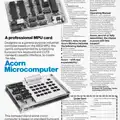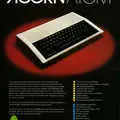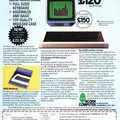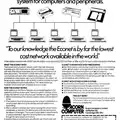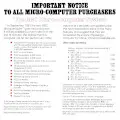
Acorn Advert - July 1985
From Practical Computing
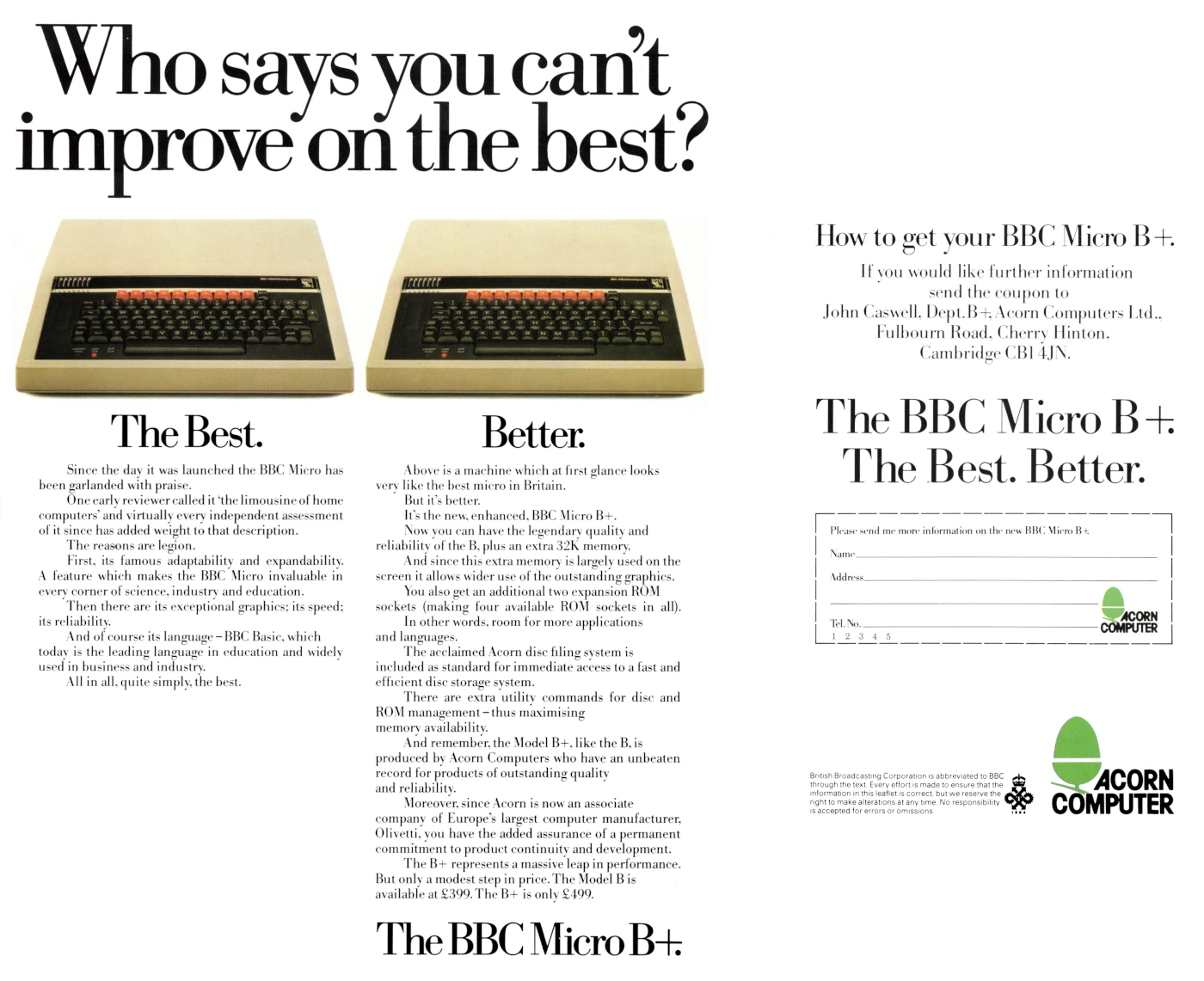
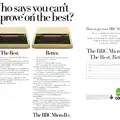
Who says you can't improve on the best?
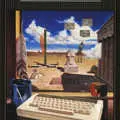
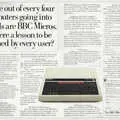
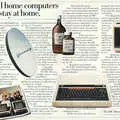
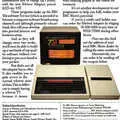
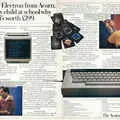
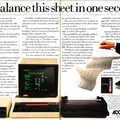
Announced in July 1985 in this glossy gate-fold four-page magazine insert, the BBC Plus, or BBC Micro B+ to give it its full name, was the long-awaited update to the original BBC Micro - the influential but late machine which had started shipping at the beginning of 1982.
The B+'s motherboard was shared with that of the delayed Acorn Business Computer, or ABC.
However, with that machine "in limbo", Acorn had found itself with something of a "components inventory" which, combined with Acorn's cash-flow problems at the time, led to the B+ being the first ever machine that Acorn had actually released early, in this case by several months.
At launch, it retailed for £499 - or about £2,070 in 2026 - which was a significant premium over the competition of the day, which included Commodore, Atari and Amstrad. Practical Computing seemed to consider this merely a "reflection of free-market economics", saying:
"Acorn commands a premium because it has a captive education market and because it designs for a product life of more than two years. On the same principal, the Apple II is more expensive because it has a huge software base, and IBM charges more for its logo[1]".
Although the motherboard had been extensively redesigned, Acorn had once again missed an opportunity to do a "Sinclair" and had not massively reduced the chip count - a source of significant cost-savings - but had instead optimised things more modestly, such as using 64kbit RAM chips instead of 16kbit.
It did however finally offer 64K RAM, up from the old machine's 32K - just in time for the rest of the market to have moved on to 128K.
However, Acorn had moved the existing four "sideways ROM" sockets to make them more accessible to the user - without having to remove the keyboard - and by rolling up some other funcionality had freed up another two sockets, giving the B+ a total of six sideways ROMs slots.
Also updated was the original Intel 8721 disk filing controller chip - the presence of which had caused Intel to have to re-open one of its old production lines in order to fulfil demand - in favour of the cheaper and more modern Western Digital 1770.
Unfortunately, Acorn had chosen - for backwards-compatibility reasons - to simply emulate its older Acorn DFS 1.2, a move which Practical Computing reckoned was "a disappointment".
There were however plans to ship Acorn's Advanced Disc Filing System, or ADFS, a version which was already available on the Electron.
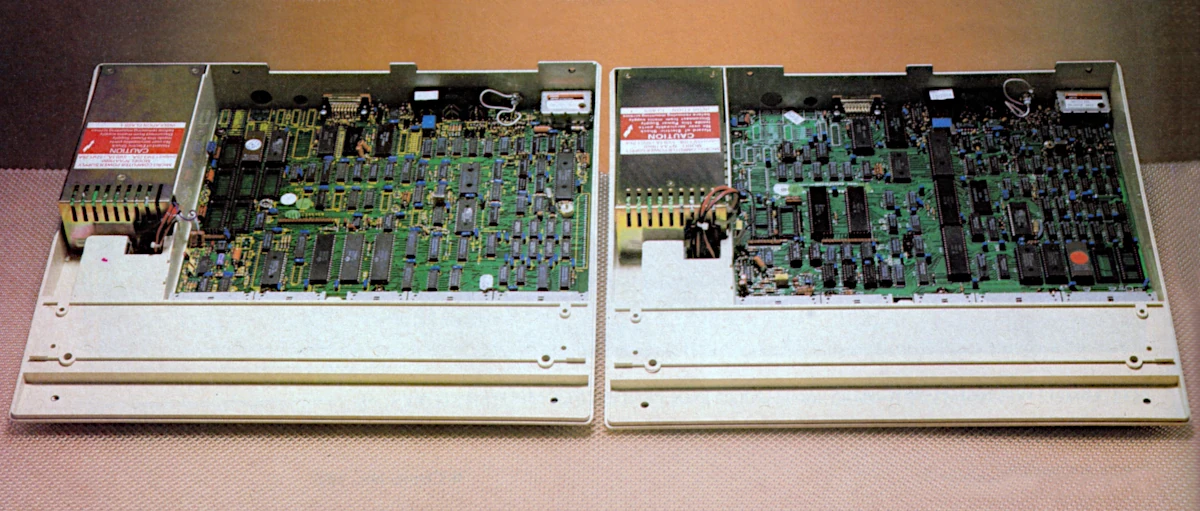
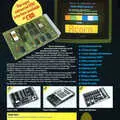
Spot the difference: the "new" BBC+ motherboard is on the left, whilst the old Model B is on the right. There's not much obviously changed, although the big mass of memory chips on the right of the old motherboard has mostly gone. From Practical Computing, July 1985
Elsewhere though, things were much the same, largely because of the BBC Micro's popular role as an input/output machine in laboratories and schools, and this was a function which required lots of peripheral controller chips as well as devices to gate, or isolate, them from direct electrical contact with the outside world.
The processor was still running at 2MHZ, but it had had a slight update in the shape of MOS Technology's 6512 - a variant of the 6502 but which supported a two-phase externally-based clock, which made it electronically-easier to support the BBC's extensive range of external peripherals.
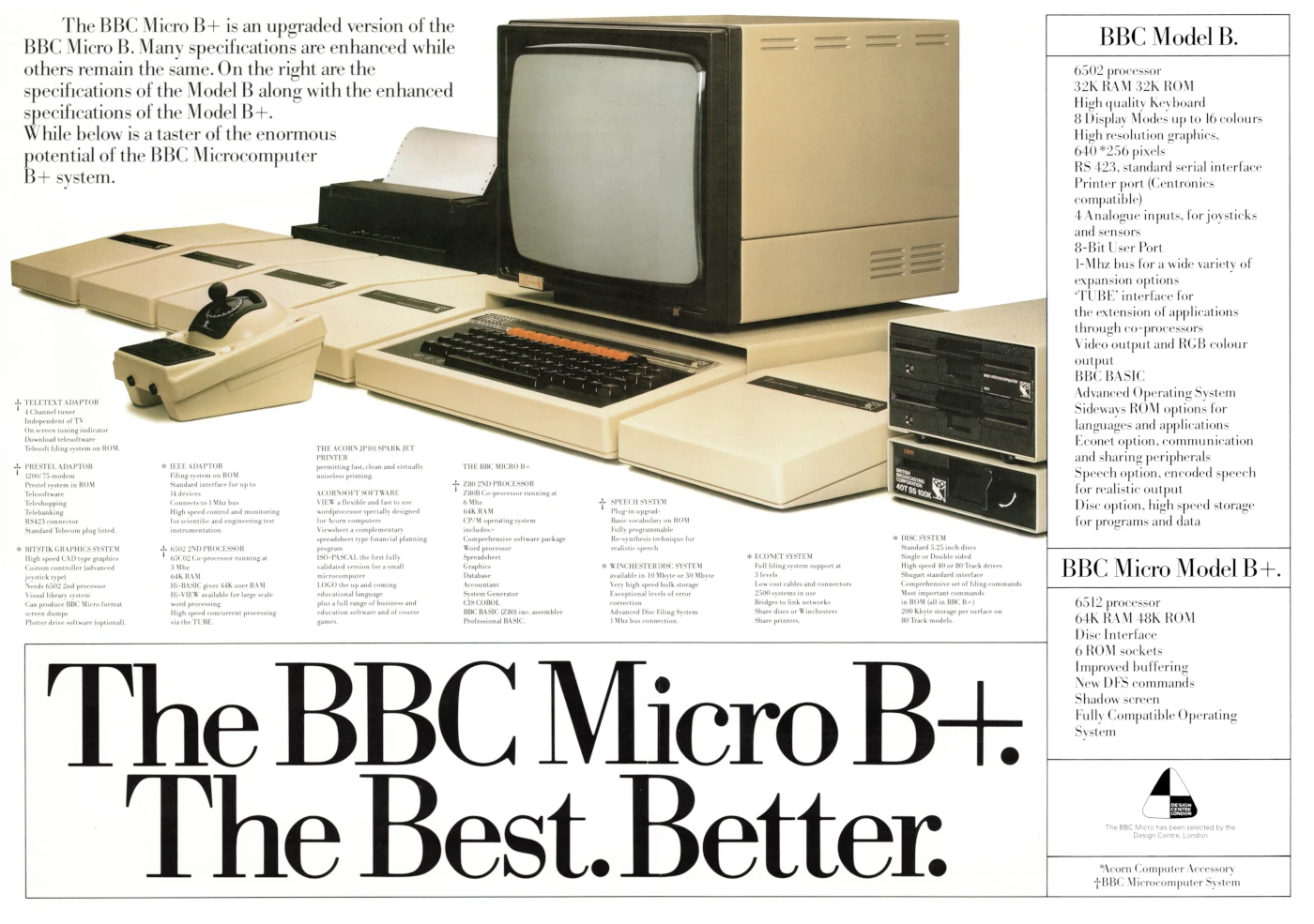
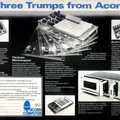
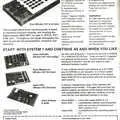
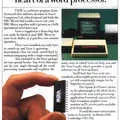
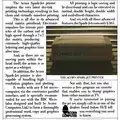
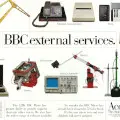
The inside of the four-page insert, showing the BBC B+ as the heart of an extensive ecosystem of hardware, including a Teletext Adapter, Prestel Adapter, IEEE Interface Adapter, 6502 Second Processor Unit, Z80 Processor Unit, a speech system, printers and disk drives. Note that the list of enhancements is relatively short, and of those probably only the extra memory was of immediate use to most users. From Practical Computing, July 1985
Practical Computing, in its July 1985 edition, concluded in its review that:
"When the BBC Micro was launched it was a superb machine. The second processors, and other enhancements such as teletext, IEEE, instrumentation and music synthesis, have kept it abreast of the state of the art. It is still a superb machine with facilities which will keep it vital for several years yet. Acorn should have concentrated its resources on the computer itself, and left the add-ons to third-party suppliers. The B+ is at least two years late yet it still bears indications — such as the outmoded DFS software — that it was released in a hurry. The price includes a heavy premium because the principal purchasers are a captive market. The new motherboard offers improved performance coupled with lower manufacturing cost, so there is no doubt that it will completely replace the existing model B as soon as current stocks are sold[2]".
It was perhaps the latter comment that revealed why dealers were said to have been "dreading" the arrival of the BBC B+, as despite being almost the same machine, it was £100 more expensive and so would be even harder to sell in a competitive market.
Date created: 27 January 2026
Last updated: 01 February 2026
Hint: use left and right cursor keys to navigate between adverts.
Sources
Text and otherwise-uncredited photos © nosher.net 2026. Dollar/GBP conversions, where used, assume $1.50 to £1. "Now" prices are calculated dynamically using average RPI per year.