A history of the microcomputer industry in 300 adverts
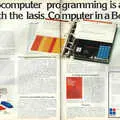
Iasis
January 1977
Microcomputer programming is a snap with the Iasis Computer in a Book
This is a real wild-card entry from Iasis Inc. of Sunnyvale in California - an actual functional computer in a book, with surrounding 250-page instructional material in the form of a programming course....
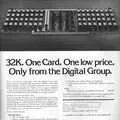
Digital Group
August 1977
32K. One card. One low price. Only from The Digital Group
The Digital Group was entirely unrelated to the other Digital - Digital Equipment Corporation, or DEC - and was founded in Denver, Colorado, in 1974. It went bust only five years later, thanks to supply...
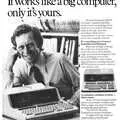
Hewlett-Packard
November 1980
HP85: It works like a big computer, only it's yours
HP's 85, launched this year, was billed as a "scientific desktop" computer. It was built around the company's own proprietary CPU, running at a surprisingly-slow 0.625MHz. However, it apparently made...
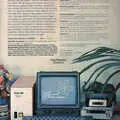
Polymorphic
July 1977
The Poly 88 Microcomputer System - from PolyMorphic
PolyMorphic had started out making expansion cards for the Altair 8800 - the micro launched in January 1975 that as well being the first affordable microcomputer in the modern sense also gave the world...
Commodore
August 1982
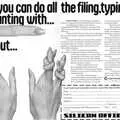
Silicon Office: Now you can do all the filing with one finger
This is a slightly disturbing advert produced by Commodore in partnership with (or sponsorship of) Bristol Software Factory, for the latter's Silicon Office product. It's along the lines of the "buy...
Micronet
November 1983
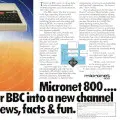
Micronet 800: Tunes your BBC into a new channel of news, views, facts and fun
Micronet was a popular subsection of the dial-up information system Prestel. Prestel - which shared a technological specification with television Viewdata systems like Ceefax and Oracle - had been launched...
Sinclair
November 1982
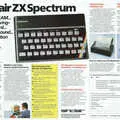
Sinclair ZX Spectrum: Colour and sound... High-Resolution graphics... from only £125!
This advert shows the Mark 1 Spectrum - as shown by the light grey keys - which retailed for £125 (or around [[125|1983]] in [[now]] terms), and in a bit of a Sinclair theme, promised "coming soon" stuff...
Commodore
February 1983
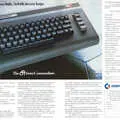
At £299 it's very little. At 64K it's very large
The Commodore 64 - sometimes known as the SuperVic - was the company's replacement for its VIC-20 machine, the limited but popular home micro which was the first computer to sell more than one million...
Microtanic
1st September 1983
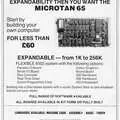
If you want flexibility and expandability, then you want the Microtan 65
The Microtan 65 was a single-board computer first built by Tangerine in 1980. Available as either a kit, or ready assembled, Tangerine sold around 10,000 of the 6502-based boards before abandoning it....
Digital Research
September 1977
CP/M low-cost microcomputer software
Called at the time a "control program for microcomputers", hence the initials, CP/M had become the de-facto operating system for many microcomputers of the mid 1970s, following its launch in 1973. It...
TLF
September 1977
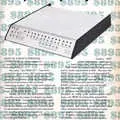
TLF Mini 12: Why buy a micro when you can buy a mini for less!
One of the most popular range of minicomputers in the 1960s and '70s was DEC's PDP - Programmed Data Processor - series of sometimes room-sized machines (once disk units and printers had been added)....
Cromemco
April 1977
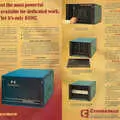
Cromemco Z-2: Meet the most powerful μC system available for dedicated work
Just a few months after Cromemco's Z-1 Z80-based micro was launched comes an update in the shape of the Z-2. Only there doesn't seem to be that much updated - it still runs the same 4MHz Z80 microprocessor,...
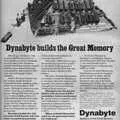
Dynabyte
November 1977
Dynabyte builds the Great Memory
Mangling grammar slightly to get in a reference to the Great Pyramids of Giza, and going the extra mile by apparently cutting up one of its memory boards to make an actual pyramid - complete with awesome...
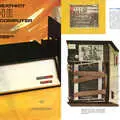
Heathkit
September 1977
The Heathkit H11 Digital Computer
This advert, for Heathkit's H11 microcomputer, was part of an extravangant sixteen page spread in September 1977's Byte - The Small Systems Journal magazine. It introduced the company's H8 and H11 micros,...
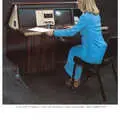
Noval
June 1977
If you can imagine it, you can achieve it with the Noval 760
Noval was founded in the summer of 1976 as a spinout of Gremlin Industries, a manufacturer of electronic arcade games. Its stated mission aim was to supply the market with its own in-house microprocessor...