A history of the microcomputer industry in 300 adverts
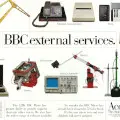
Acorn
December 1985
BBC External Services
This advert seems to represent the end of a period of retrenchment for Acorn following a difficult year which had seen it bailed out by Italian company Olivetti back in February. For most of the year...

Acorn
August 1989
The Archimedes A3000
The A3000 was an update of the original Archimedes - also known in at least some parts of the press as the ARM, or more simply the Arc or Archie - which had been launched in 1987 and which first started...
Apple
May 1984
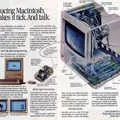
Introducing Macintosh. What makes it tick. And talk.
Famously introduced by an Orwellian Ridley Scott-directed advert at the 1984 Super Bowl - shown only once - and billed by Steve Jobs as "the fastest and most powerful computer ever placed in the hands...
Tandy/Radio Shack
December 1984
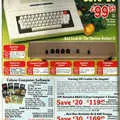
Here's an up-front saving on the Tandy 16K Color Computer 2
Here's a festively-themed advert for the second version of Tandy's Color Computer 2, or "CoCo". With £20 off coz it's Christmas, the CoCo was available for only £99.95 - only [[100|1984]] in [[now]]...
Digital Research
November 1985
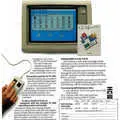
Introducing the new and improved IBM PC. From £49.50
Much has been written about how CP/M, the pioneering, multi-platform operating system written by Gary Kildall and his company Digital Research - originally known as Intergalactic Digital Research and...
Acorn
November 1986
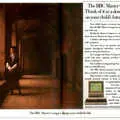
The BBC Master Compact: Think of it as a down payment on your child's future uniform
The BBC Master Compact was an entry in the BBC Master series, which in turn was produced as the follow-up to the BBC Model B microcomputer, first launched at the end of 1981. It was designed jointly...
Micronet
June 1985
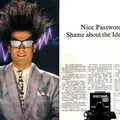
Micronet 800: Nice password, shame about the identity
With an advert containing a theme still relevant to a modern audience - "your special identity number and personal password [are] the valuable key to a huge database" - Micronet 800 was a subsection of...
Elliott
4th July 1962
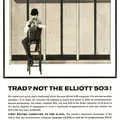
Trad? Not the Elliott 503!
The Elliott 503 was built by British computer company Elliott Brothers, a subsidiary of the Elliott Automation Group, as a much faster but software-compatible evolution of the 803 mentioned in the advert....

ACT/Apricot
April 1985
A beginner's guide to the best in business computers
ACT had carved out a briefly-successful niche in the UK with its Apricot range of micros, several of which touted their "Sirius" compatibility, rather than the usual IBM. However, when the company launched...
IBM
July 1984
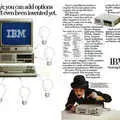
With PCjr, you can add options that haven't even been invented yet
The PCjr, also know by its development code-name of "Peanut" - and variously as Hercules, Sprite, Pigeon and Pancake - was IBM's attempt to crack the home market, which at the time was mostly owned by...
Sinclair
November 1987
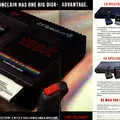
Be who you want to be: The new Sinclair has one big disk advantage
Hot on the heels of the Sinclair 128K +2 Spectrum, released in August of this year, came the +3 version, which had the same slightly-non-standard 3" floppy drive that owner Amstrad used on its other machines...

Sinclair
March 1985
Turn your Spectrum into a Spectrum+ for just £20
1985 was the beginning of the end for Sinclair, at least as far as Uncle Clive was concerned. The company's "next generation" QL, launched in January 1984 but not actually available until April of that...
Exidy
January 1979
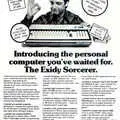
Introducing the personal computer you've been waiting for: The Exidy Sorcerer
Exidy Incorporated was the third-largest producer of video arcade games in the US when it was encouraged by Paul Terrell to enter the consumer electronics market towards the end of 1978. Paul Terrell...
Acorn
September 1984
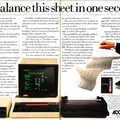
Re-balance This Sheet in One Second
Like several computers of the day, Acorn's BBC Micro could take software in the form of PROM - programmable read-only memory. Some, like the VIC-20, could take it one-program-at-a-time in the form of...
Atari
December 1982
Atari Star Raiders: New game, private property
This "advert", which appeared in the pre-Christmas edition of Personal Computer World and which encourages infringers to write to Graham Daubney - who would later become director of developments for Spectrum...