A history of the microcomputer industry in 300 adverts

Toshiba
October 1984
Toshiba MSX
Although Toshiba had dabbled in the computer market a couple of years before, with its T-200, and whilst the US and the UK markets were busy churning out as may systems as possible without regard to compatibility...
MITS
August 1975
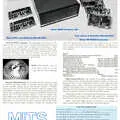
Altair 8800: World's Most Inexpensive BASIC Language System
If there's one microcomputer that can claim to be the grandaddy of the entire industry then it's this - the Altair 8800, from Micro Instrumentation and Telemetry Systems, better known as MITS. Originally...

Tandon
December 1986
Tandon: The Magnificent Seven
This advert more than many sums up the dullness of the microcomputer industry in the latter half of the 1980s. Instead of an actual variety of computers, like Commodore might have had with its VIC-20,...
Atari
June 1983
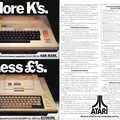
Atari 400 and 800: More K's, Less £'s
Excepting an egregious use of "less" instead of "fewer", this advert nicely shows Atari's 400 and 800 machines, which had been launched in 1978 but didn't make it to the UK until 1981 or so. The project...
Triumph-Adler
June 1983
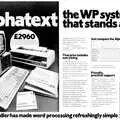
Alphatext: the WP system that stands alone
Here's an advert for another dedicated word-processing system, in an era where it seems that the idea that general-purpose computers could do word processing as well as other things seems to have passed...
Digital Group
April 1978
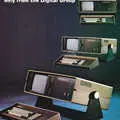
Tomorrow's computer here today: The Bytemaster
The Bytemaster - or perhaps more correctly the Mini Bytemaster - was the last computer to be designed by the Digital Group, of Denver, Colorado, before the company's collapse in 1979. It was based around...
Equinox/Parasitic
October 1977
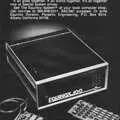
Equinox: All Together Now!
The Equinox 100 was a Zilog Z80 or Intel 8080-based system with an industry-standard S-100 bus - the most popular bus standard of the day. It was built by Parasitic Engineering of Albany, California,...
Tandy/Radio Shack
November 1982
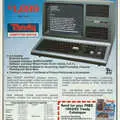
Tandy TRS-80 Word Processing System
There was a phase for a few years where the idea of microcomputers being general-purpose machines still hadn't caught in with some sectors of the market, and so these general-purpose machines would still...
North Star
January 1978
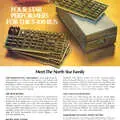
North Star: Four star performers for the S-100 bus
A simple advert for North Star's range of S-100 boards - designed for its own Horizon micro, but compatible with any other S-100 micro running Intel's 8080 or the Zilog Z80 processor. The range included...
MicroDaSys
December 1978
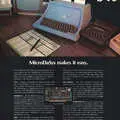
Get it out of your system: MicroDaSys makes it easy
On the face of it, this is yet another Motorola 6800-based system with an S-100 bus, however it's perhaps the micro which more than any other most closely resembles an actual typewriter. It's shown...
Heathkit
December 1978
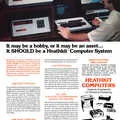
It SHOULD be a Heathkit Computer System
This is another advert from The Heath Company of Benton Harbor, Michigan - and which traded as Heathkit - for a variety of its micros and peripherals of the day. It's also nice for a change that the...
Columbia
November 1982
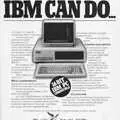
Columbia PC: Anything IBM can do...
This is an advert for a hugely-significant machine in the history of the microcomputer - in particular that of the modern PC, in the IBM sense. It's for Columbia Data Products' PC - the first legal IBM...
Dynabyte
December 1978
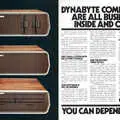
Dynabyte computers are all business inside and out
This is a nice advert for Dynabyte showing various models in its DB series of microcomputers. The middle box is the company's DB 8/1 microcomputer - a 4MHz Z80 CPU with one parallel and two serial ports,...
Shelton
January 1982
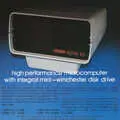
Shelton Sig/Net: 211 Power!
With a design that would not have looked out of place on Gerry Anderson's "Space: 1999", the Shelton sig/net 211 - designed by Chris Shelton, who had once worked for Nascom - was one of a range of modular...
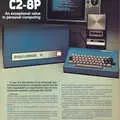
Ohio Scientific
September 1978
Ohio C2-8P: An exceptional value in personal computing
Released at about the same time as the company's much larger (and more expensive) Challenger III range, the II was aimed more at the small-business and personal end of the market - as seen by the cassette...