A history of the microcomputer industry in 300 adverts

Dataindustrier/Luxor
June 1980
ABC 80 - The new powerful personal computer from Sweden
It would be easy to think of the personal computer revolution as being a purely US and UK thing, although these were by far the largest and most active markets. There were, however, home-grown computers...
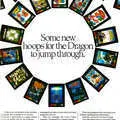
Dragon Data
November 1983
Some new hoops for the Dragon to jump through
This advert for Dragon software comes at a time when the company was going through yet another financial crises, which this time involved an additional investor injection of £2.5 million, triggered by...
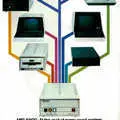
Midwest Scientific Instruments (MSI)
June 1979
MSI 6800 - At the root of every good system
The MSI 6800, from Midwest Scientific Instruments, was a Motorola MC6800-based system running at 2MHz on SWTPC's SS-50 bus. It was first launched in 1977. The Motorola MC6800 CPU could nominally support...
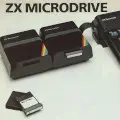
Sinclair
November 1983
ZX Microdrive - Now on release
Sounding something like a statement on the fate of a serial murderer from a top-security prison, this advert, which was part of one of Sinclair's regular "mini magazines" within the magazine they were...

Sinclair
December 1985
Trying to play all the games you can get for the Sinclair Spectrum could kill you (about 5,000 times)
Perhaps the first time that "software sold a machine" was when the release of VisiCalc saved the Apple II in 1979, but certainly by the mid 1980s the availability of software had become a significant...
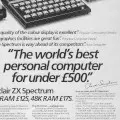
Sinclair
September 1982
The world's best personal computer for under £500
Sinclair was nothing if not bold with its claims, including this one that the Spectrum - announced just a few months before at a press conference at the Churchill Hotel on Friday, 23rd April 1982 - was...

Sinclair
June 1987
Get your hands on the new Sinclair 128K +2. Before everybody else does
Released under the management of Amstrad, which had bought Sinclair for its name and assets on April 7th 1986, the Plus 2 was launched without much fanfare in the August of the same year. It was then...
Sinclair
January 1980
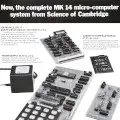
Now, the complete MK 14 micro-computer system from Science of Cambridge
Right on the cusp of the launch of the ZX80, Science of Cambridge was still selling its MK 14 - or Microcomputer Kit 14 - which had been launched back in the summer of 1978. The price was still broadly...
Commodore
November 1977
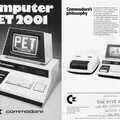
Commodore's philosophy: Computer PET 2001
This is part of an eight-page A5 booklet produced for the launch of the Commodore PET in the UK, a machine which made its debut at the Chicago Consumer Electronics Show in January 1977, months before...
Opus
April 1987
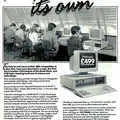
In a class on its own: Opus PC II
Opus was another of those companies, like Memotech, that had started out as a technology supplies company, selling things like the Discovery system for the Spectrum, which combined a 3.5" disk drive and...
Comart
December 1984
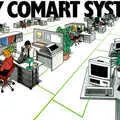
From a Single Comart Workstation... The Mighty Comart System Grows
This is another entry in the IBM-alike pantheon, or IBMulators as PRAC liked to call clones in the mid 1980s, from one of several companies of the time that started out as re-sellers or importers. Comart...
ITT
January 1980
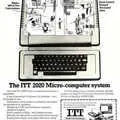
The ITT 2020 Micro-computer system: No, this is not a typewriter!
The ITT 2020's claim to fame is that it was the first officially-licenced Apple II Plus clone made specifically for the European market. Despite being a clone, it differed in a few important ways, the...
Wren Computers
December 1984
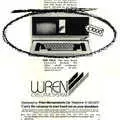
The Wren Executive: Carry the company in your hand, not on your shoulders
Billed as a portable, but really just a luggable along the lines of the much earlier IMSAI PCS-80/30 from 1978 or the more contemporary KayPro, the Wren was built by Thorn/EMI, a company which was also...
Tandata
December 1984
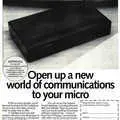
Tandata Tm 200: Open up a new world of communications to your micro
Tandata Design Consultants formed out of Tangerine, the makers of the Microtan 65, as a designer and manufacturer of modems and communications equipment, with the top end of its modem range selling for...
ACT/Apricot
December 1984
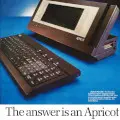
The answer is an Apricot from ComputerWorld
Applied Computer Techniques - ACT - had previously been importing the Chuck Peddle-designed Victor 9000, which was known as the ACT Sirius in the UK, and before that it was a supplier of Commodore PET...