A history of the microcomputer industry in 300 adverts
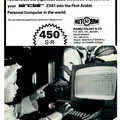
Sinclair
March 1984
The first Arabic personal computer in the world
This is an interesting advert for what was billed as the first ever Arabic personal computer in the world - a modified version of Sinclair's ZX81. In an era when English-derived programming languages...
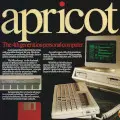
ACT/Apricot
October 1983
Apricot - the 4th generation personal computer
ACT - Applied Computer Techniques - of Dudley, near Birmingham, was set up in 1965 as a mainframe accounting bureau by Roger Foster. Foster had left Wolverhampton Grammar School in 1957 before qualifying...

Amstrad
April 1990
Can your computer keep pace with the Amstrad PC2286?
Several years after Amstrad had battered through the UK home and small-business microcomputer industry with its range of keenly-priced machines, it was still going, here offering an Intel 80286-based...
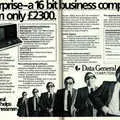
Data General
October 1983
Enterprise - a 16 bit business computer from only £2,300
Data General was a minicomputer manufacturer which was established in 1968 by Edson de Castro, the former manager of DEC's PDP-8 program. A year later it released the Nova minicomputer, which was the...
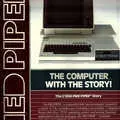
Semi-Tech/Pied Piper
October 1983
The computer with the story!
It may have had a story to tell, but it seems to be a fairly conventional one, being as it was a 64K CP/M luggable, complete with a built-in carry handle. On the upside, it did have a particularly large...
COMX
June 1983
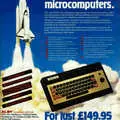
COMX-35 - the new world in family microcomputers
Designed in the Netherlands by Noxon AB and produced by the Hong Kong-based company COMX World Operations Limited - a trading-name of Video Technology - the little-known COMX-35 was if nothing else unusual...
IBM
March 1983
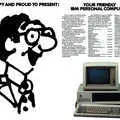
I'm happy and proud to present your friendly IBM personal computer
The IBM PC, a.k.a 5150 had been launched in the US in 1981, but had only been unofficially available in the UK via the grey import market since the summer of 1982. It was being imported by companies...
TDI/Sage
March 1984
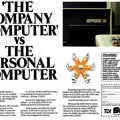
The Company Computer vs. the Personal Computer
1983 had been the year of Ethernet, with 3Com breaking cover as the first commercial manufacturer, with its network card appearing in January on the Altos micro. At the time it was considered a risky...
Torch
23rd June 1984
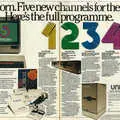
Unicorn - Five new channels for the BBC. Here's the full programme.
A few months before the launch of Torch's Graduate - an attempt at a complete IBM PC "plug-in module" for the BBC - comes the Unicorn. This was a range of what were effectively entire computers in a...
EACA/Genie
June 1983
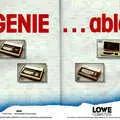
GENIE - able
Here's a simple advert from Lowe Computers - formerly Lowe Electronics - the sole UK importers of the Genie series of computers, built by enigmatic Hong Kong company EACA and which nicely sums up the...
Gemini Micro
July 1983
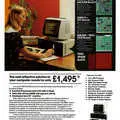
Galaxy 2 Computer System - Whatever requirements you have
This advert for the British-made Galaxy 2, from Gemini Microcomputers of Amersham, Buckinghamshire, seemed to have been around for ever - in fact the spec of twin Z80A processors with twin 400K 5.25"...
Acorn
March 1984
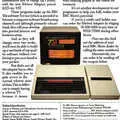
Free software, only £225
Looking much like its contemporary - the Prestel adapter - and with the same BBC Micro case-matching shape, Acorn's new Teletext adapter was perhaps better value as at least the content was free and didn't...
Olympia
March 1984
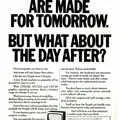
All microcomputers are made for tomorrow. But what about the day after?
Here's another also-ran in the micro stakes from yet another typewriter company - Olympia International. The curiously-named "People" was an 8086-based machine that ran either CP/M-86, MS-DOS or GSX-86....
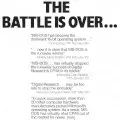
Microsoft
July 1983
The battle is over: MS-DOS has become the dominant 16-bit operating system
There's nothing like a bit of gloating, and this advert certainly has it in spades, featuring as it does a set of quotes about how Microsoft's MS-DOS had killed off CP/M to become the industry standard....
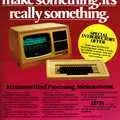
Haywood
June 1983
Haywood: When the British make something, it's really something
It's tempting with 20/20 hindsight to giggle about bespoke single-task machines like the oddly-named Haywood 9000 Composite in the light of the all-purpose IBM Micro, which dawned at the end of 1981....