Apple Advert - March 1983
From Practical Computing
Evolution. Revolution.
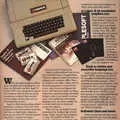
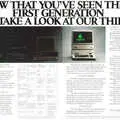
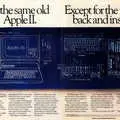
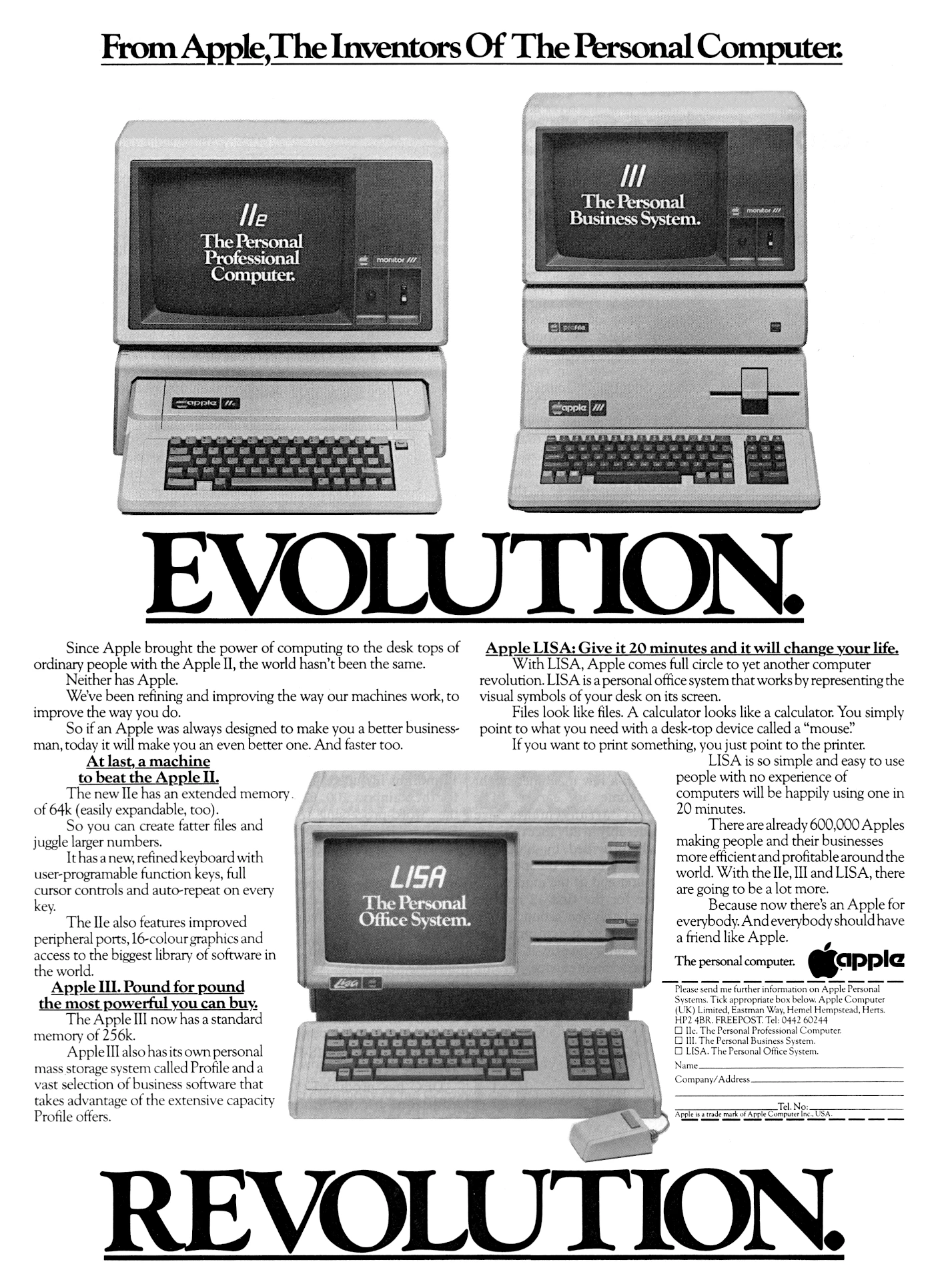
With Apple's famous "reality distortion field" in full effect with the the oft-made but incorrect claim that Apple invented the personal computer, and that since the release of the Apple II the world "hasn't been the same", is this advert for Apple's Lisa.
Announced in January 1983, and available in Europe by the summer of that year, the Lisa was the first mass-market computer to offer the full "WIMP" - Windows, Icons, Mouse, Pointer - experience.
It was aimed at "business and professional people to use as a tool to improve their personal productivity", rather than simply as a personal computer in the IBM PC sense.
At the time of Lisa's launch, Apple released figures which showed that only 18% of its machine were currently selling in such an office environment, with 46% being sold to small businesses, 11% to education, 12% for scientific/industrial use, 6% "other" and only 7% for home use.
That contrasted with the US, which with its higher disposable income was seeing more Apples being sold as home computers than for any other use.
Discussing the UK microcomputer industry in a review of the 1982 Personal Computer World Show, senior editor of Byte magazine, Gregg Williams, even said:
"Because it is so expensive abroad, the Apple II is known primarily in Britain and Europe as a business machine, believe it or not[1]"
Significantly though, the distinctive feature of the UK market appeared to be that most use of the Apple II - which was selling around 20,000 a month worldwide - was as a "small business data-processing machine", which as Practical Computing pointed out, was not really using it as a personal computer at all.
So it was this office sector that Apple believed was an "unexploited growth area", at least in the UK, where there were "said to be ten times as many office situations as small businesses[2]".
It had apparently taken 200 man-years to develop the software - or about three years in real time - which was significantly more than the 25 man-years for the Apple III and the two for the original Apple II.
And while DEC's investment into personal computers for 1982, according to its UK managing director Darryl Barbe, had been in excess of $1 billion dollars - about the same as Apple's entire yearly revenue at the time - Apple's investment into the Lisa was proportionally much higher, with the company effectively putting "all its chips on the table" according to chairman Steve Jobs, who went on to say:
"We are willing to bank the company on this"
However, the various concepts that the Lisa helped make mainstream weren't actually new.
Most had already been developed at Xerox's Palo Alto Research Center in the late 1960s and early 1970s[3], with ideas from the Dynabook and the Xerox Star. Even ICL's existing Perq CAD workstation was already using the same sort of interface[4].
The Xerox influence was quite direct - the company's Larry Tesler had been one of the engineers who had first shown the Star to Steve Jobs, before being poached, along with several other Xerox employees, by Apple.
Not surprisingly he swiftly became a key member of the $50 million, three-year-long Lisa project, as well as heading up development of the Application Developer's Toolkit[5].
This Pascal-based system was an important part of Apple's strategy for the Lisa, which was engineered to completely hide the operating system and to provide built-in software solutions to the common jobs which Apple had identified as being "the core of the office information worker's task".
These tasks, which Apple reckoned applied to half the working population - which was one reason why Apple was optimistic about Lisa's future - included drawing, writing, calculating, graphing, listing, mailing and filing, scheduling, and communicating with larger systems.
For other tasks that Lisa couldn't provide solutions to, the developer's toolkit offered a library of routines allowing developers to fill in the gaps, whilst conforming to the Lisa interface standard in both graphics and mouse use[6].
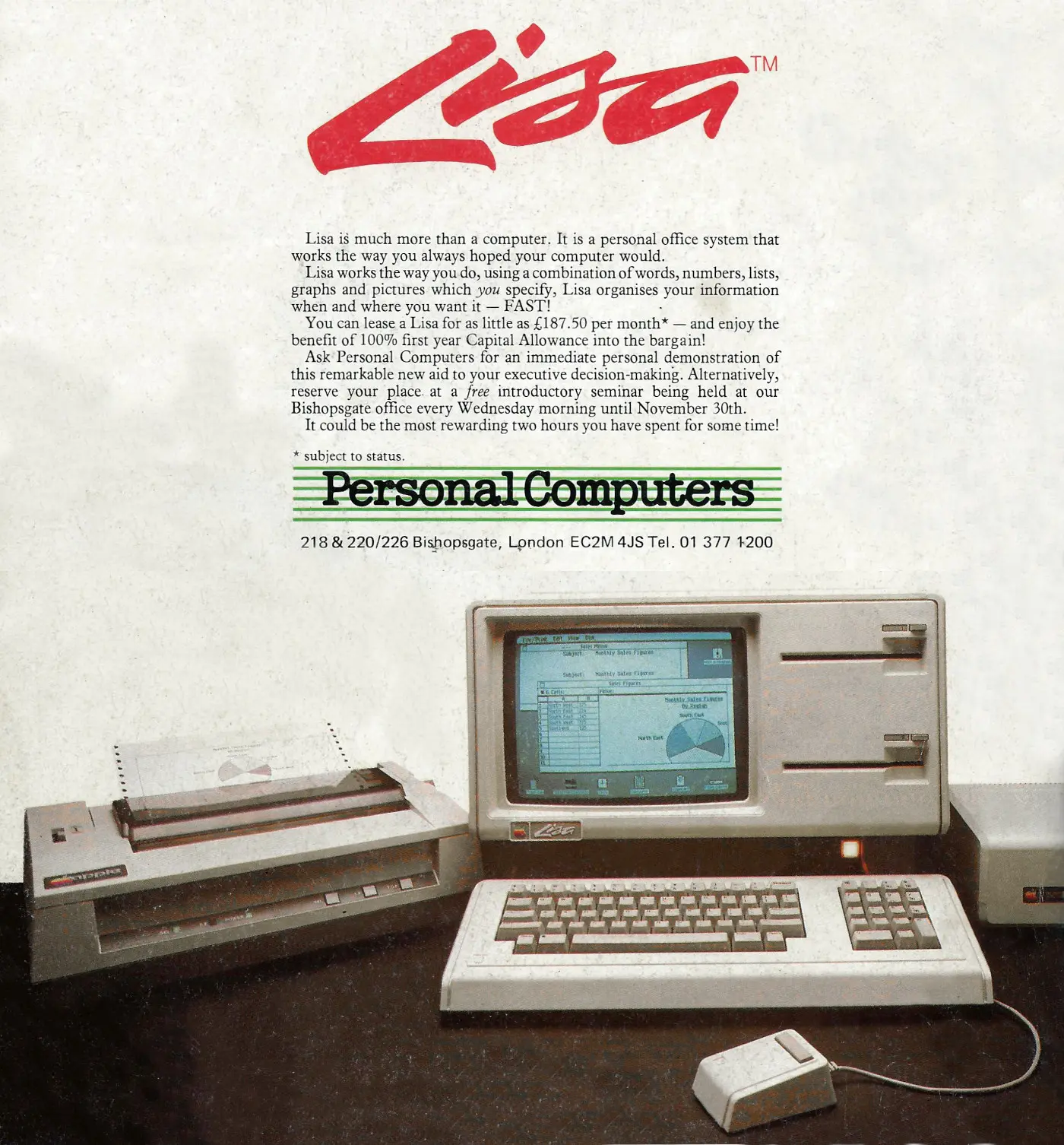
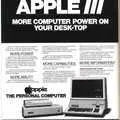
A back-of-the magazine advert for the Lisa from Personal Computers of Bishopsgate in London, which was also offering free introductory seminars on the machine on Wednesday mornings throughout November. The Lisa was also available to rent from the firm at £187 per month, which is around £850 in 2026.
The Xerox Star was still considered to be the nearest competitor to the Lisa, but at £15,000 for the system plus £50,000 for the Ethernet network you needed to use it - a total of £296,900 in 2026 money - it made the £8,000-odd (£36,500) for the Lisa look like a bargain[7].
Even Commodore's Jack Tramiel had a dig at Lisa's high price saying at the 1983 Hanover Fair, saying:
"We like Lisa, but it's just a tiny bit too pricey".
Tramiel claimed that Commodore was going "to produce a machine with all the features of Lisa for $2000 to $3000 by the end of the year"[8] although he was being vague about the exact details of the rumoured "Mouse Cursor" machine[9] which would become the Atari ST.
But at least the Lisa could be rented for "only" £187 per month, which is about £850 in 2026, or around the same as a £100K mortgage.
With those sorts of prices on offer, perhaps it's no wonder that the feeling with Xerox was reported to have been "we blew it", although for the money you did at least get no fewer than three 8-bit processors in addition to a 16/32-bit Motorola 68000, together with 1MB RAM and two 860K floppy drives.
The Lisa's ridiculously high price, at a time when even a real IBM PC was available for under £3,000, was one reason that it failed to sell.
Its ambitious but highly-complex software, written in Pascal and SmallTalk[10] - also a product of the Xerox Star development - was also considered buggy when released. Personal Computer World's Guy Kewney wrote that:
"it isn't going to be bug-free this year [but] it may be bug-free enough for the really enthusiastic user to tolerate by September [of 1983]"[11].
The use of Smalltalk on the Lisa was ironic, given that only the previous year Apple's Steve Jobs, whilst defending the Apple III's 8-bit 6502 processor, had suggested that:
"people who are chasing 16 bits and more memory are in the wrong race"[12].
However, Edward Cherlin of research company Strategic, based in San Jose, California, pointed out that the Smalltalk language, which developed from Xerox's "desire to make the machine/person interface as easy as possible", was one of the greatest benefits of 16-bit processors, because it was a very RAM-hungry language that could only run on systems with 16-bit address spaces.
This finally gave such languages "sufficient room to include all features without arbitrary limitations"[13].
Towards the end of the year, Apple UK announced a significant price drop for the Lisa, following a reduction in the US, although this required the purchasing of a software package containing six programs whether you wanted them or not.
The price had been reduced by nearly 20% and was down to £6,500 - about £29,600 in 2026 - which included the six programs "for the price of four".
Apple also reported that "about 200 machines [have been] installed with large, national-account types of business" out of around 2,000 that were thought to have been sold worldwide up to that point.
The enforcing of software was said to have been down to the lack of third-party Lisa software in the UK, whereas allowing North American buyers to go free range "made much more sense in the US", at least according to Apple UK's general manager Mike Spring "because of the much larger market for third-party software"[14].
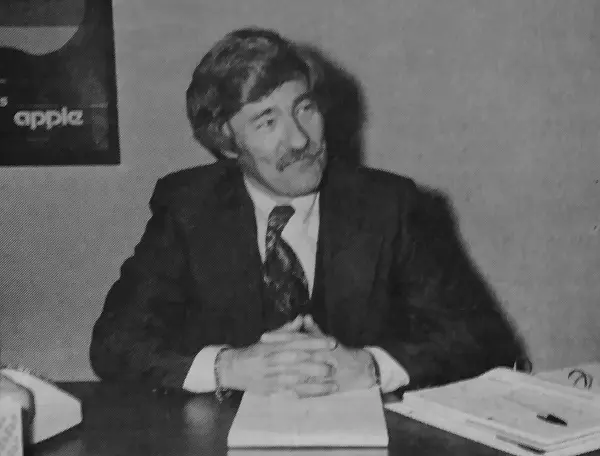
Thomas J Lawrence, Apple's European Manager, © Practical Computing September 1982Before it was released as the Lisa, the machine was perhaps inevitably known in the press as the Apple IV, since "top Apple people" had arrived in London "John the Baptist" fashion, according to Practical Computing at least, to spread the word about their fourth-generation machine.
Apple was firming up its belief that such fourth generation machines would only sell on the back of good software - a process which included the trimming of 231 dealers (from nearly 600 at the previous count) by ex-Commodorean Keith Hall, the new Apple UK marketing head.
As European vice president Thomas Lawrence suggested:
"Hot hardware won't win the battle".
This meant that it was expected that the new machine would bring with it a good selection of its own software, since it was unlikely that Apple would be wasting its new machine's rumoured 16-bit processor and memory by "emulating CP/M or some other historical artifact"[15].
By 1984, the Lisa's price had been dropped down to a mere £4,000, or about £17,400 in 2026 and by the start of 1985 it had renamed it as the Macintosh XL, in order to end confusion about its Mac compatibility[16].
Not long afterwards in May it was announced that it was being dropped completely in favour of the regular Macintosh, albeit a version of the Mac that finally had some extra memory - 512K - and a bigger 20Mb hard disk.
Apple was feeling the heat from Atari's 520ST and other GEM-based micros[17].
Some of the ethos that led to the Lisa had been expressed by Steve Jobs way back in 1980, when he had been speaking at the Rosen Research Personal Computer Forum in New Orleans, along with Commodore's Chuck Peddle, Bill Gates of Microsoft, John Roach of Radio Shack/Tandy and Allan Alcorn of Atari.
When asked what he understood by the term "personal computer", Jobs said that it is:
"when a one-to-one relationship develops which gives the user a feeling of independence and power that he could not experience in a large data processing environment or which wouldn't be possible without the aid of the computer. The 'nuts and bolts' must be shielded from the user in such a way that the machine itself recedes in to the background and the user sees it solely as a tool for his particular task".
He continued that personal computers should be seen as simply tools which amplify "the natural capabilities of the human mind"[18].
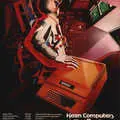
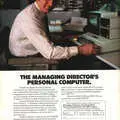
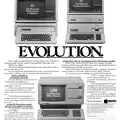
The advert above shows three of Apple's machines - the venerable Apple II, launched in 1977, the Apple III and the Lisa.
Of the three, two of the machines - the III and Lisa - were considered failures, with neither selling particularly well.
The Apple III did so poorly, selling around 65,000 in its lifetime, that Apple was effectively forced to re-introduce the Apple II, which it had tried to retire, with the IIe variant, whilst the Lisa was always hobbled by its price.
Nevertheless, it did re-define how a computer could be, with its implementation of Xerox's WIMP user-interface ideas from the Star.
Practical Computing, in its March 1983 preview of the machine, when comparing the Apple II, the Lisa, and the then-rumoured Macintosh - which it optimistically thought might be a budget machine like a new Apple I - said that:
"Of these machines the Lisa is without question the most innovative, and it is aimed at developing completely new markets for personal computers. Just when the micro market looked like it was becoming boring, with well-engineered but rather predictable 16-bit crates merely replacing the old standard CP/M machines or replacing minicomputers, Apple has opened the whole thing up by taking a risk. And the Lisa forcefully reintroduces the concept of the personal computer as an individual tool, almost a personal extension, which is where Apple originally came in with the Apple II[19]"
It wouldn't be until Apple released the Macintosh in 1984 that "WIMP" computers really took off.
Date created: 03 February 2026
Last updated: 22 February 2026
Hint: use left and right cursor keys to navigate between adverts.
Sources
Text and otherwise-uncredited photos © nosher.net 2026. Dollar/GBP conversions, where used, assume $1.50 to £1. "Now" prices are calculated dynamically using average RPI per year.