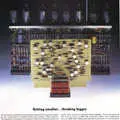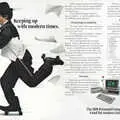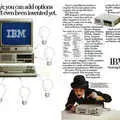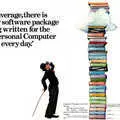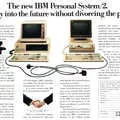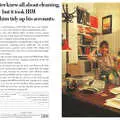
IBM Advert - January 1993
From Personal Computer World
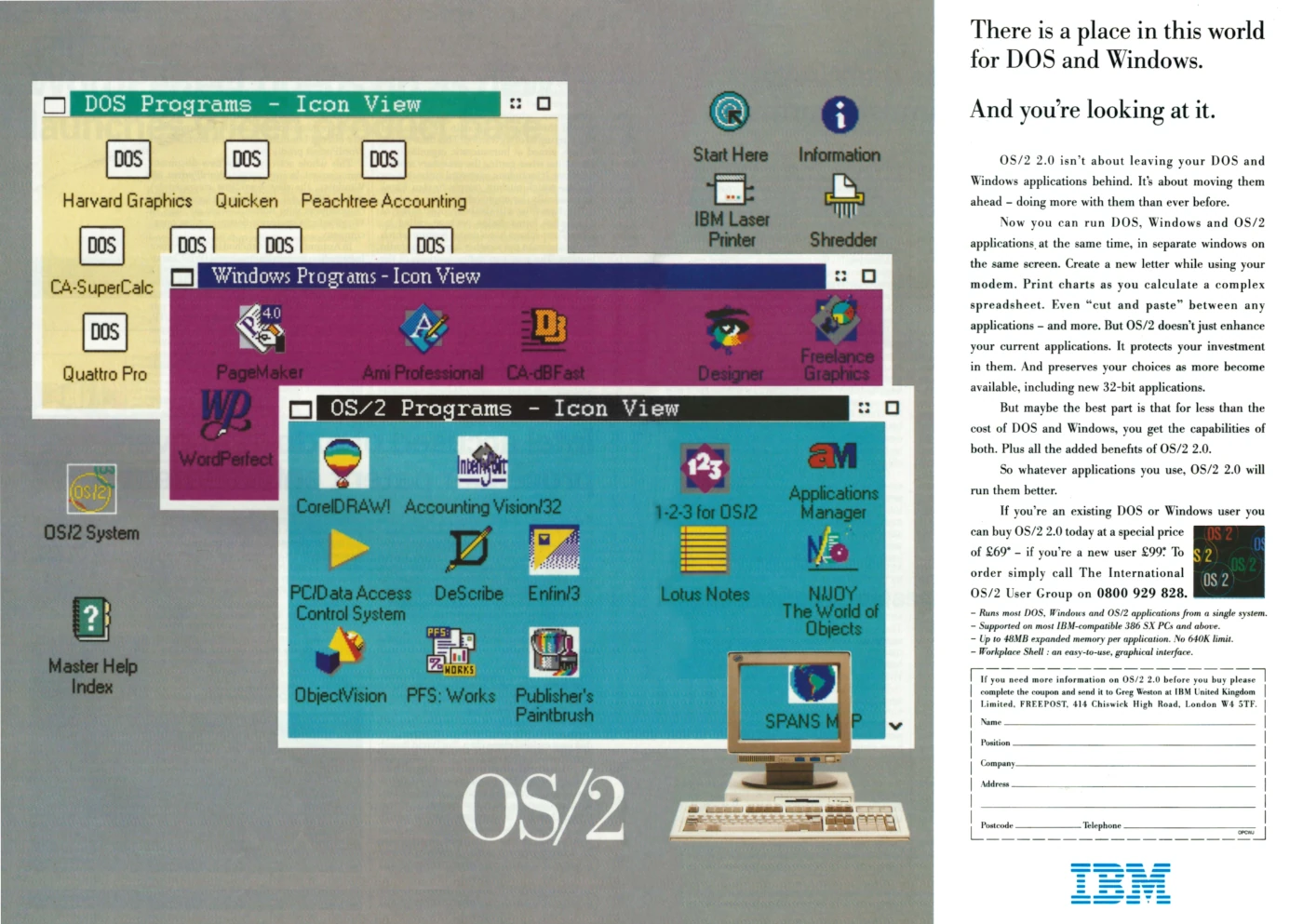
There is a place in this world for DOS and Windows. And you're looking at it.
OS/2 was an operating system originally intended to replace Microsoft's PC-DOS on IBM's then-latest IBM PC - the PS/2.
Intended as a multi-tasking and windowing operating system, it was initially co-developed with Microsoft, with the two companies signing a joint development agreement in April 1987[1].
However, it was significantly delayed to the extent that its first release had to be text only, with the Presentation Manager part not arriving until the following year.
By the time it was shipping as a full operating system, Microsoft's own Windows 3 had already built up a huge install base, and when OS/2 version 2.0 was released and IBM announced that it had shipped one million copies, Microsoft was noted to be shipping one million copies of Windows every month, largely thanks to Windows being bundled with almost every new PC.
According to Personal Computer World, although OS/2 was accepted as "a suitable platform for bespoke software development", it had been roundly rejected by a significant majority of third-party developers, with only Lotus targetting it as a development platform.

PCW's Turkey of the year award, given to OS/2, amongst others. From Personal Computer World, March 1993By 1990, the agreement with Microsoft turned sour and the partnership broke up, leaving IBM to continue with development largely by itself, which it did until its last major release - OS/2 Warp 4 in 1996.
All of which led to Personal Computer World giving OS/2 its "Turkey of the year" award for 1992, quipping:
"The only way for IBM to get a reasonable return on its R&D and marketing investment into OS/2 would be for the company to reformat all the OS/2 disks and sell them off as blanks[2]".
Some of the criticism directed at OS/2 was addressed in version 2.1, which was released around the end of March 1993 and which was surprisingly offered as a free upgrade for existing users.
Additional features included long-awaited compatibility with Windows 3.1, with IBM claiming that Windows applications would now run on OS/2 at about the same speed as on a native Windows system. It was also said that OS/2 would offer better crash protection than Windows.
There was also something of a surge in third-party application support, with WordPerfect 5.2, and WordPerfect Presentations and Office arriving during 1993.
Also planning to ship ports of almost its entire range of applications was Computer Associates, which was perhaps not surprising as most of CA's revenue derived from its IBM mainframe software range[3].
Perhaps it was always a bit of a lost cause: by early 1993, a survey derived from "confidential reports from 37 major US software firms" showed that in the UK and Europe, sales of Windows were now higher than those of MS-DOS, with Windows software also making up half of total sales.
The growth in Windows had helped increase sales for the US firms surveyed by 40% since the first quarter of 1991, whilst US sales had only grown 12%, with most of that growth for MS-DOS products[4].
None of this growth seemed to include IBM itself, which in early 1993 announced losses that at the time were a corporate record in the US.
These included a loss of $5.5 billion (around £11 billion in 2026) in the fourth quarter of 1992 alone, on sales that were down 11% to $19.6 billion. Worryingly for the company, it had also made a loss on its mainframe and AS/400 minicomputer line for the first time.
The figures also included a charge of $11.6 billion, which IBM had set aside to cover costs associated with closing down factories as well as making 42,900 staff redundant. The company also reckoned a further 25,000 more staff would be heading out of the door during 1993.
IBM's problems led to the loss of both its president and chief financial officer, who announced his retirement. The company was also said to be looking for a replacement for its chief executive, John Akers, within 90 days of its financial results being announced.
Personal Computer World observed that whilst IBM claimed that it might look to "outsiders" to fill the vacancies, the company generally seemed to fill senior posts in the same way as Soviet presidents used to somehow emerge from the woodwork.
The magazine also posited that an outsider might find a lack of familiarity with IBM's "Big Grey Cloud" - the nickname for the company's bureaucratic management structure - a challenge to actually getting anything done[5].
A few months later, OS/2 seemed to be "losing credibility with key software companies", according to Personal Computer World, at a time when Microsoft's NT seemed to be finally getting ready to ship.
Although somewhat surprisingly, IBM had actually agreed to re-sell NT on its high-end "superservers" - the PS/2 Model 195 and 295.
In more bad news for IBM though, one of OS/2's other key developers - Micrografx - announced that it was pulling out to re-focus its business. Chairman and chief executive Paul Grayson said:
"We don't see the rationale for additional investments when there's no apparent demand for the ones on the market[6]".
Jack Schofield, writing in June 1993's Personal Computer World, seemed to think that OS/2 had finally bitten the dust, saying:
"OS/2 has always been unnecessary. It only came into being because IBM and Microsoft wanted a proprietary desktop operating system to replace DOS. But instead of throwing billions of dollars down the drain on an old-fashioned operating system like OS/2, they could have invested in a proper desktop version of Unix, something like the Mach-based NeXTstep but better. Microsoft Windows NT — the continuation of OS/2 by other means — is equally unnecessary for many of the same reasons. If the Unix industry had got its act together five years ago, NT shouldn’t stand a chance. However, the fact that some of the major desktop Unix suppliers have left it until the last possible minute to react to the impending NT juggernaut doesn’t inspire much confidence in their success[7]."
Much of Microsoft's work on OS/2 version 3.0 - in particular OS/2 LAN Manager - is said to have lived on in what became the release of its first "workstation" operating system, Windows NT.
Date created: 08 December 2025
Last updated: 13 December 2025
Hint: use left and right cursor keys to navigate between adverts.
Sources
Text and otherwise-uncredited photos © nosher.net 2026. Dollar/GBP conversions, where used, assume $1.50 to £1. "Now" prices are calculated dynamically using average RPI per year.