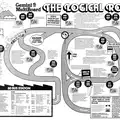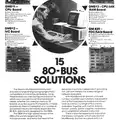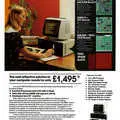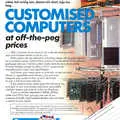
Gemini Micro Advert - November 1982
From Personal Computer World
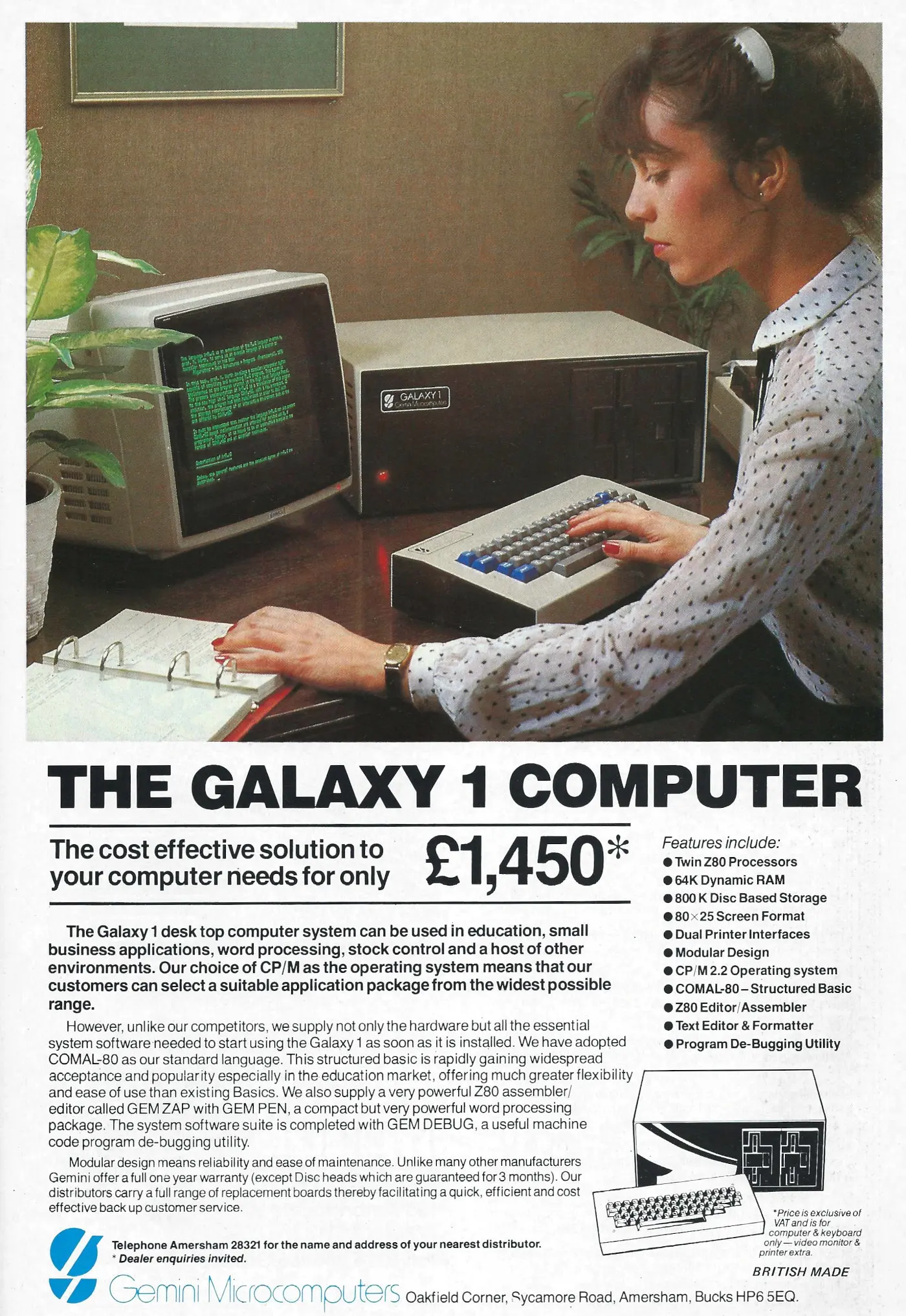
The Galaxy 1 Computer - The cost-effective solution to your computer needs
The Galaxy 1, from Amersham-based Gemini Microcomputers, was a Z80 - or actually twin Z80, with one just to do the video - microcomputer which was based around the company's older multiboard system.
Gemini Micro had been founded by John Marshall, the founder of Nascom, which for a while had been the UK's most successful micro company with its Nascom 1 system.
Nascom went bust in 1980 and then spent the next two years in receivership before it was finally bought by Lucas Logic in 1982.
There had been a couple of failed rescue attempts in between, including one from John Margetts, a member of the Nascom Microcomputer Club, and another by Manas Heghoyan, owner of a Watford-based PCB company.
During this time the company continued shipping micros and even became profitable again, so there were a lot of Nascom systems around, including the new Nascom 3 from Lucas, which was essentially a Nascom 2 in a nice case.
In order to service this market, Gemini Microcomputer was founded initially to continue building NASBUS cards and peripherals.
Gemini's first computer range - the Gemini 801, or GM801 - was launched at Compec towards the end of 1980.
The three models in the range had been designed by the consultancy Specialist Micro Design Ltd, which had itself been formed by ex-Nascom engineers.
The business-focussed 801 was a Z80-based machine running CP/M and came with 64K RAM and two 5¼" floppy disk drives. It retailed for £1,075 plus VAT, which is about £8,090 in 2026.
There were also two "home" or hobbyist models available - the 801A and the 801B.
In both of these the floppy disk drive was replaced with a cassette interface, whilst CP/M was effectively replaced with an 8K BASIC in ROM.
The 801A sold for £695 plus VAT (£5,230) whilst the 801B, which came without a case, retailed for £575 (£4,330).
All three machines also had the relatively-unusual feature of a RAM-based character generator, which meant that the display characters could be re-programmed by the user. Practical Computing suggested that this meant that the micro "could act as a low-cost terminal for an APL system".
The company followed up with the Gemini 802, which was also tweaked, rebranded and sold as the Mimi 802 from British Micro - a company set up by one-time-potential Nascom buyer Manas Heghoyan.
Unlike the GM801 or 802, which didn't appear to be built around the NASBUS or 80-Bus as it was later renamed, Gemini's next micro - the Gemini 1 of the advert - definitely was and as such was considered as offering an upgrade path for the many owners of Nascom boards and micros[1].
When it was launched towards the end of 1982, it retailed for £1,450 plus VAT, or about £8,270 in 2026.
Although apparently aimed at the office/business market - it came with a "compact but very powerful word processing package" - the other software that shipped with the Galaxy 1 seemed aimed more at developers, with a Z80 assembler editor and a machine-code monitor.
Otherwise, it was a fairly standard Z80 system of the time (and from several years before that), with dual floppies, CP/M 2.2 and 64K.
It did however stray off the path slightly with its use of COMAL-80 - the improved structured-programming version of BASIC.
COMAL had been developed by Danish mathematician Børge Christensen because he had been finding it hard in his teaching role to mark the unstructured BASIC programs submitted by his pupils.
Alternatives like Pascal were far too complicated, but Pascal's structured approach was far superior to BASIC, which didn't really have any structure at all.
And so in 1976, Christensen, with the assistance of computer scientist Benedict Løfstedt, developed COMAL - or Common Algorithmic Language - as a deliberate compromise between the two languages.
It wasn't fully developed until the early 80s, having evolved in the meantime via the feedback received from teachers and students who had been using it.
However by then it had become the standard language used in Danish schools, with Danish education authorities even requiring that any computers purchased with public money must come with COMAL[2].
The language seemed to be picking up momentum - it would be one of the languages suggested for the forthcoming BBC Micro - with Commodore even releasing a public-domain version of it in the spring of 1981.
Commodore's PET had been reasonably popular in schools, and the company was keen to keep it established in the education market in the face of increasing competition.
Date created: 15 January 2024
Last updated: 12 March 2026
Hint: use left and right cursor keys to navigate between adverts.
Sources
Text and otherwise-uncredited photos © nosher.net 2026. Dollar/GBP conversions, where used, assume $1.50 to £1. "Now" prices are calculated dynamically using average RPI per year.