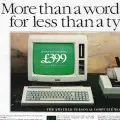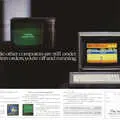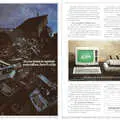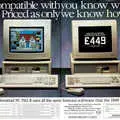
Amstrad Advert - January 1993
From Personal Computer World
The advanced PC. For beginners.
It's nearing the end of the line for Amstrad's micros, although unlike many other companies which went bankrupt or suddenly exited the industry to avoid bankruptcy, Amstrad seemed to simply get bored with computers.
Instead, the company was more interested in the satellite set-top decoder market that had opened up a couple of years before following the launch of Sky in the UK.
However, it did carry on with its computer line until 1997 at which point Amstrad PLC was wound up, with its computer business being rolled into Viglen, one of Amstrad's previous acquisitions from 1994.
It was not just boredom though. The market had shifted significantly from the days following Amstrad's purchase of Sinclair in 1986, when it was the brash "new kid on the block" offering well-specced and cheap computers - including ground-breaking machines like the PCW 8256 - to where Amstrad was merely one of hundreds of companies shifting IBM compatibles.
Founder and managing director Alan Sugar even admitted as much when he revealed in a shareholders letter, published in November 1992, that Amstrad was now a "me too" competitor, and that the company was no longer a "leader in product development". Sugar continued:
"Attempting to replicate the past success of Amstrad by gambling on product ideas and building up large stocks in the hope of achieving 'blockbuster' sales would be putting shareholders' funds at risk".
As a result, at the beginning of 1993, Sugar started on an attempt to buy back all of his shares for 30p each in order to put the company back in private hands, whilst pledging to keep all of its employees.
Amstrad was also making moves to streamline its range, by concentrating on "acceptably profitable" products, and was considering closing down some of its international sales operations.
Despite having once proclaimed that Amstrad's success was because it hadn't tried to take on foreign markets, the company had acquired several overseas subsidiaries, however these were apparently bought:
"without a coherent international strategy, bringing with them burdensome operating overheads".
All of which added up to uncertainty about the company's future, with Sugar admitting that there were "no detailed plans for the company", and that he could not offer a "meaningful forecast of profit or loss in the context of the proposal [for the buy-back] to shareholders"[1].
Also in early 1993, Amstrad was struggling with the threat of punitive tarrifs being imposed by the US on Korean mempory chip manufacturers, which the Department of Commerce had accused of dumping RAM into the US market at below the cost of manufacture.
This had happened before in 1988, which led to Amstrad ending up buying a 9% stake in US chip manufacturer Micron in order to protect its supplies.
Unfortunately for Amstrad, this turned out to be - in Alan Sugar's words - a "lousy deal", with the company eventually selling off its stake three years later at a loss of around £12 million[2]. That's about £33 million in 2026.
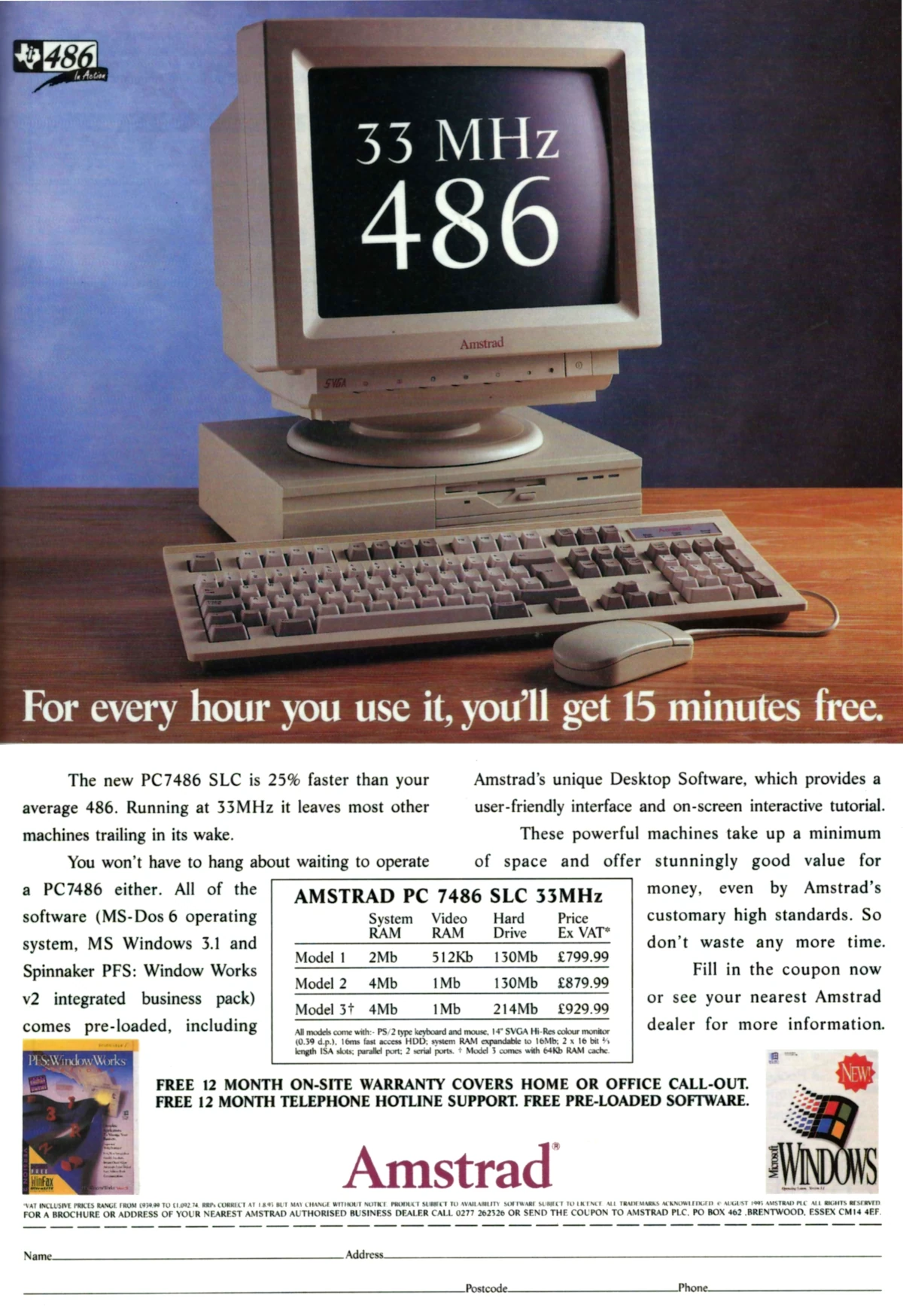
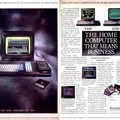
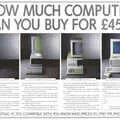
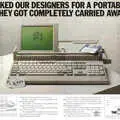
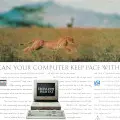
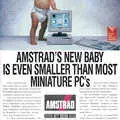
Such was the pace of processor evolution at the time that within just nine months of the main advert, which had featured 286 and 386-based micros, there's an update in the shape of Amstrad's PC7486 SLC - a 486-based micro running at 33MHz. The top-of-the-range machine, with 4MB memory and a 214MB hard drive, was available for a competitive £930 plus VAT, or around £2,480 in 2026.
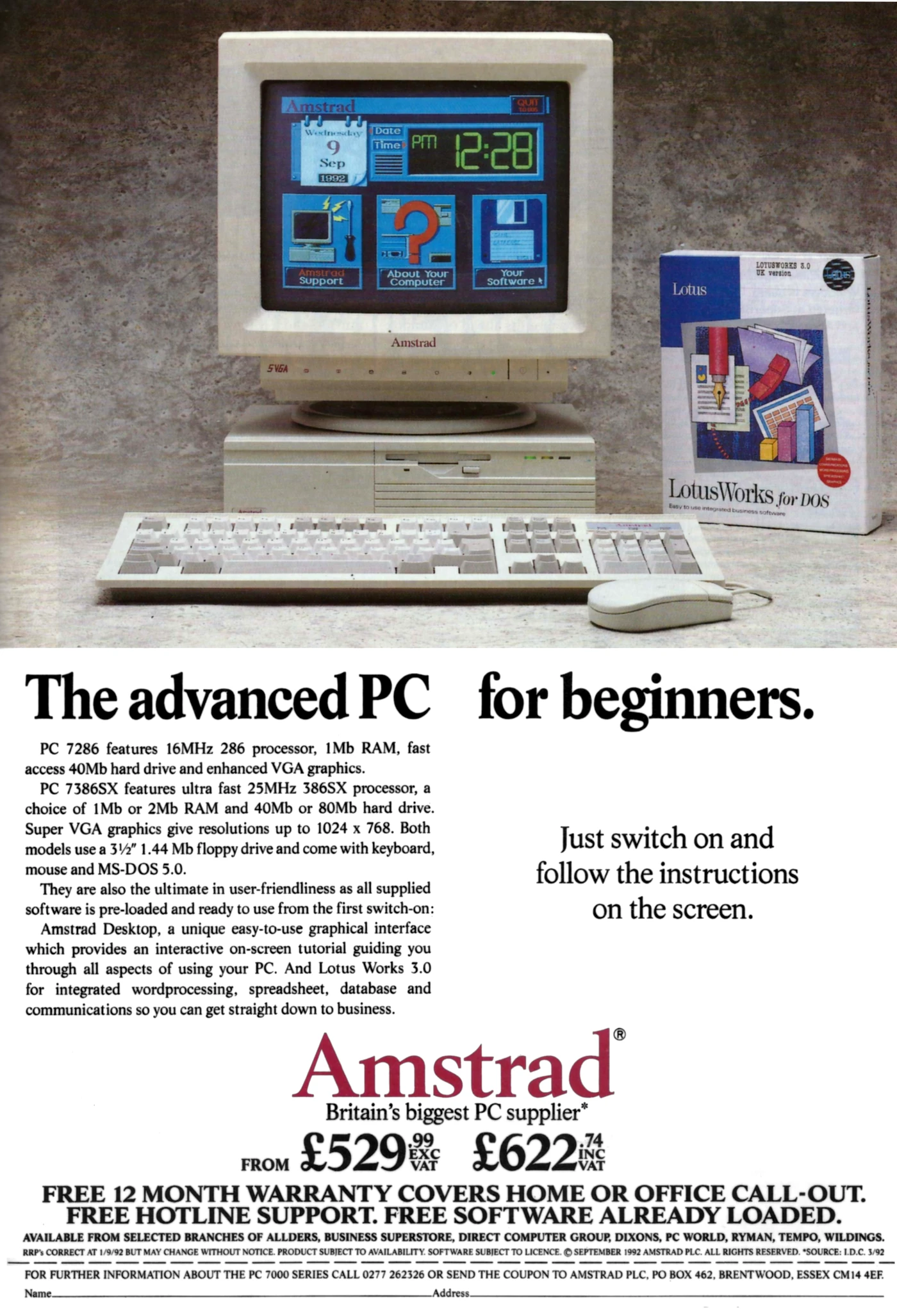
Meanwhile, as if to confirm how predictable the computer market had become, the two machines on offer in the advert are utterly standard - one based on the Intel 80286, and the other on the 80386SX - or "Essex" as Guy Kewney of Personal Computer World once called it.
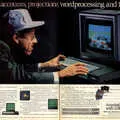
There was a slight differentiator though: the machines, as well as coming with pre-loaded software, also included the Amstrad Desktop, which booted into a tutorial on start-up, helping users to "get straight down to business".
The top-of-the range 386 computer retailed for a reasonable - if slightly specific - £622.74, which is about £1,660 in 2026.
Date created: 02 December 2025
Last updated: 21 January 2026
Hint: use left and right cursor keys to navigate between adverts.
Sources
Text and otherwise-uncredited photos © nosher.net 2026. Dollar/GBP conversions, where used, assume $1.50 to £1. "Now" prices are calculated dynamically using average RPI per year.