IBM Advert - March 1983
From Personal Computer World
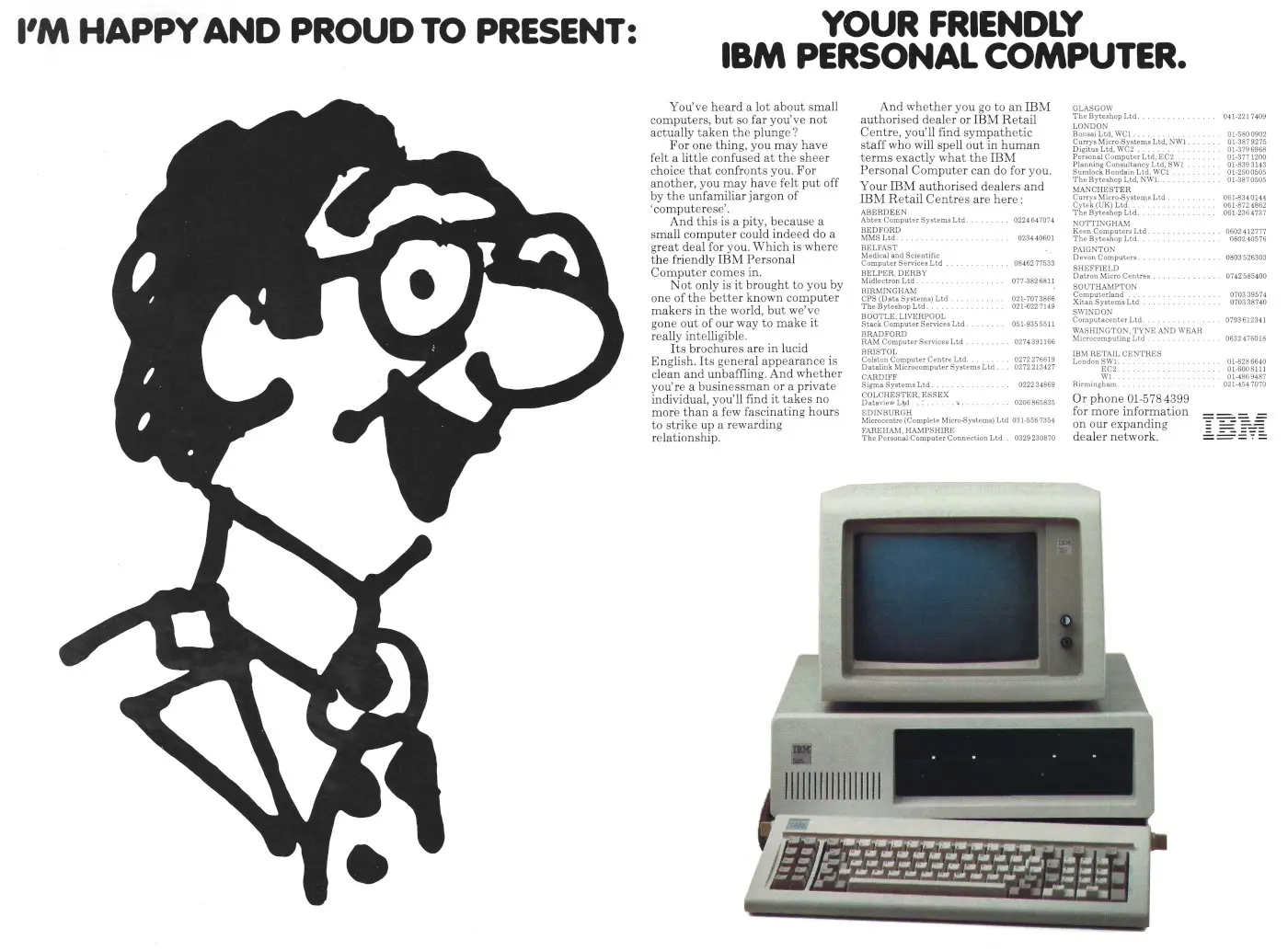
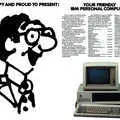
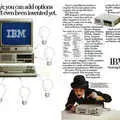
I'm happy and proud to present your friendly IBM personal computer
The IBM PC, a.k.a 5150 had been launched in the US in 1981, but had only been unofficially available in the UK via the grey import market since the summer of 1982.
It was being imported by companies like Microcomputerland, which was thought to have sold possibly thousands of machines in this way - despite them requiring the use of US to UK transformers - before it eventually went bust at the end of 1982, still waiting for the official release[1].
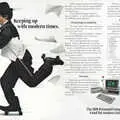
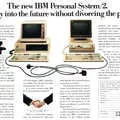
This didn't happen until January 18th 1983 with this advert being just a couple of months later, making it very much part of the formal launch of the 5150 in to the UK.
The advert was also one that was clearly recycling Commodore's "friendly computer" tag that had been used with the VIC-20, even though the IBM PC could be argued to have been anything but friendly, with its high price, feeble specification and hostile early version of MS-DOS (PC-DOS v. 1).
By the time it made it to the UK side of the pond, not much had changed with the machine itself, despite the near-18 months since its US release.
Minimum memory was now up to 64K - IBM had actually released a cassette-based home version of the PC in the US with a ludicrously-small 16K - whilst disk drives were now 320K.
And unlike Apple, whose concession to a UK keyboard was adding the £ symbol whilst failing to put " and @ the right way round, IBM's UK model came with a proper UK keyboard.
Also, unlike the grey imports over the last year or so, the UK IBM didn't require an external transformer, which was a bonus.
It wasn't especially cheap though, with the recommended business system of a PC with 128K RAM, two 320K drives and a printer going for £3,442 plus VAT, which is around £18,200 in 2026.
Over in the States, at end of 1983, IBM added another 300 shops to its distribution network, bringing the total up to 1,100. This meant that more than half of all computer shops in the US were offering the IBM PC.
It also had its own branded retail outlets, with nearly 100 opened by the end of the year. Writing in October 1983's Personal Computer World, Sol Libes said:
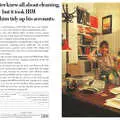
"There is no doubt that IBM has become the most aggressive marketer of small business computers to appear on the personal computer scene. It spends as much on advertising as all its leading competition combined"[2].
It was noted though that this hadn't translated well to the UK or Europe, where ACT/Victor's Sirius 1 was still doing well.
Meanwhile, Practical Computing concluded in its March 1983 article on the launch of the IBM in the UK, where clone manufacturers or alternatives like Sirius were alread well-established, that:
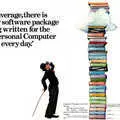
"IBM will undoubtedly do well with the PC, but is unlikely to sweep the market in quite the way achieved in the U.S. Initially, however, there will be many major companies who want the IBM machine. They will be buying in bulk, and able to negotiate a discount. Anyway, they may have IBM mainframes or minis and not be too bothered about the price. These buyers will probably absorb all the spare machines IBM can supply until the company starts manufacturing at Greenock in Scotland later this year. When you have people clamouring to buy micros and they are in short supply, why reduce the price? At least this will give the plug-compatible [clone] manufacturers — of which there are now many — a chance to build their market share. For whether the IBM PC is a huge success, or just a success, it is certainly going to set a standard. It will generate massive amounts of software and, as continuing sales of the Apple II demonstrate, software sells hardware. If it does not sell IBM hardware, then the plug-compatible rivals will benefit[3]".
Date created: 20 November 2014
Last updated: 03 February 2026
Hint: use left and right cursor keys to navigate between adverts.
Sources
Text and otherwise-uncredited photos © nosher.net 2026. Dollar/GBP conversions, where used, assume $1.50 to £1. "Now" prices are calculated dynamically using average RPI per year.