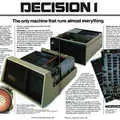
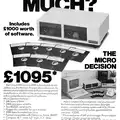
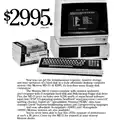
Morrow Designs Advert - August 1984
From Byte - The Small Systems Journal
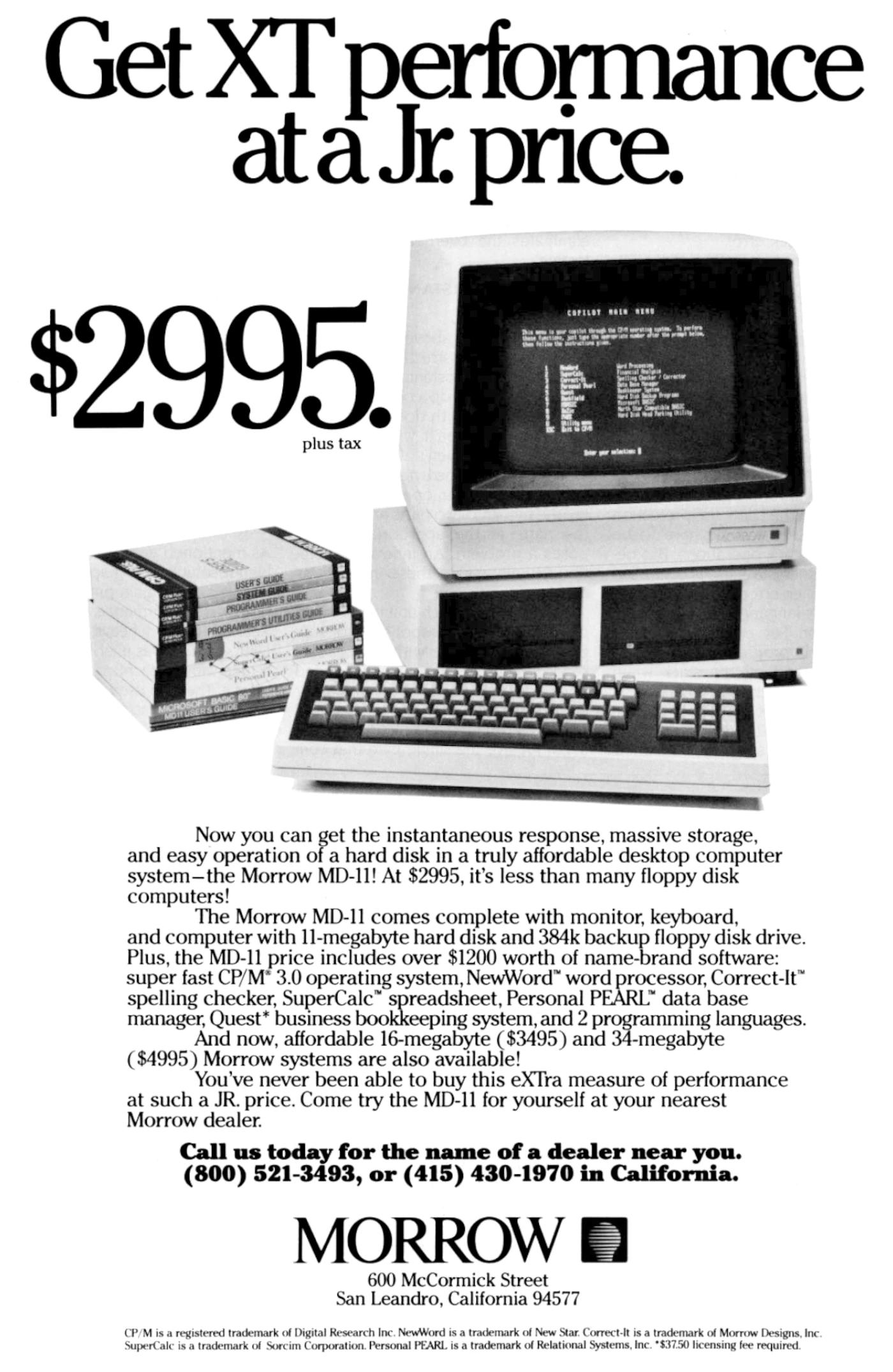
Get XT performance at a Jr. price
The MD-11 from Morrow Designs - a company founded by George Morrow which traces its roots back to the Homebrew Computer Club of the mid 1970s - was the last of the Micro Decision range of machines first launched in late 1982.
Running a Zilog Z80 with 128K of RAM, it was also the last of Morrow's CP/M machines, coming at a time when the legacy operating system was being replaced by the "newer" MS-DOS - a situation not without irony as MS-DOS was effectively a clone of CP/M.
Aimed at IBM's XT, but with a price it was suggesting was closer to IBM's failed PC Jr., the top-of-the-range MD-11 with a 34MB Winchester hard disk retailed for $4,995, which is about £14,500 in 2026.
Also in 1984, Morrow launched its Pivot "lunchbox" portable at Spring Comdex in Atlanta[1]. The design - George Morrow's last - was later licenced to Zenith, which sold it as the Z-171.
There was however an update to the Pivot, which was being sold in the UK under the Osborne label, in the shape of the Pivot II.
Improvements included a 25-line Lumicon LCD screen, which was said to be "more legible than the previous 16-line one".
At the time of the launch announcement, UK reseller Future Management, which was shipping the original Pivot I as the Osborne Encore, didn't actually know about it, but said it "may well import and sell it[2].
Unfortunately for Morrow, when a huge $27 million dollar contract (about £74 million in 2026) came up with the US government's Inland Revenue Service to equip 15,000[3] of its employees with portable computers, it was Zenith that eventually won the deal, with its version of Morrow's Pivot.
Word from the US government had been that it was rumours of Morrow's financial troubles at the time that had put the IRS off the Morrow-Sperry bid.
Even worse for Morrow, it had sold the Pivot design to Zenith on a one-time-payment flat-rate deal, meaning that it received no further royalties from Zenith's Z-171 sales.
The loss of the IRS deal, coupled with rumours of IBM releasing its own portable - which it did in the summer of 1986 and which meant that people stopped buying Morrow's in the meantime - led to the collapse of the company in early 1986[4], just weeks after the IRS deal fell through.
Date created: 29 January 2026
Last updated: 01 February 2026
Hint: use left and right cursor keys to navigate between adverts.
Sources
Text and otherwise-uncredited photos © nosher.net 2026. Dollar/GBP conversions, where used, assume $1.50 to £1. "Now" prices are calculated dynamically using average RPI per year.