A history of the microcomputer industry in 300 adverts
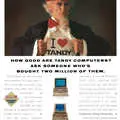
Tandy/Radio Shack
May 1988
How good are Tandy computers? Ask someone who's bought two million of them
Tandy's TRS-80 - the Tandy Radio Shack/Z80 - was one of the first three "appliance" computers - those you could take out of a box, plug in and use right away - ever, when it was launched in the August...
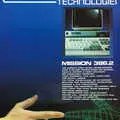
Mission
January 1988
Mission 386.2: The world's first 20MHz 80386 machine.
Here's another nice example of how it seemed every company even vaguely related to electronics was getting into the microcomputer game, in this case UK high-end hifi manufacturer Mission. It had set...
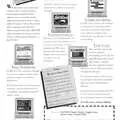
Micronet
1st June 1989
At Micronet we're really talking
Launched at the beginning of 1983, Micronet was a Viewdata dial-up service created as a Prestel project of East Midland Allied Press, the publishing and printing group. Micronet had its roots in the...
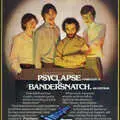
Imagine
February 1984
They may be smiling now, but they are about to encounter... Psyclapse and Bandersnatch
Imagine had formed when programming wunderkind Eugene Evans and two other senior staff left well-known software house Bug-Byte, which had been famous for Commodore and Sinclair games. The company expanded...
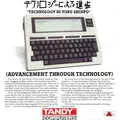
Tandy/Radio Shack
December 1986
The New Tandy 102: Technology ni yoru shinpo
It's three years since Tandy launched its TRS-80/100 portable computer, and it's back with an updated model, which is smaller and now comes with a built-in modem. It's also completely lost the TRS-80...
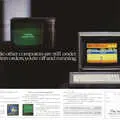
Amstrad
August 1986
Amstrad CPC 6128: While other computers are still under starters orders, you're off and running
The Amstrad CPC 6128 (although the CPC part seems to have been dropped) was first launched in the US in June 1985, before appearing in the UK in August the same year. It had only been six months since...
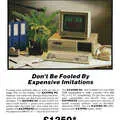
Kaypro
May 1986
Kaypro PC
The earlier Kaypro 2 luggable, built by Andrew Kay's Non-Linear Systems as a direct competitor to the Osborne 1, was very successful, selling around 10,000 units a month at one point. Its popularity was...
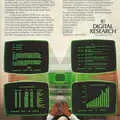
Digital Research
March 1983
Concurrent CP/M - Multiplies the power of your microcomputer
Digital Research had been set up in 1976 to capitalise on the popularity of Gary Kildall's CP/M operating system - the popular and de-facto standard OS for most serious microcomputers during the 1970s....
Kaypro
January 1984
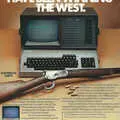
Kaypro: Our Winchesters have been winning the West
Microcomputer adverts are never shy of going with the most obvious simile or metaphor, and this one certainly does that with the placement of an actual Winchester shotgun against a Kaypro 10 - the 10MB...

Victor
May 1986
They're both analytical and calculating
It's not that common for microcomputer adverts to get political, but this one from Victor is getting stuck right in, with a comment on the lack of action for small businesses from the prime minister,...
Telcon/Zorba
October 1983
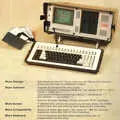
Zorba: The portable personal with more
This almost-comedy wannabe hack at the Osborne and Kaypro market, with its claim that cramming 80 columns on to a 7" screen is somehow a good thing, appeared in 1983 and was considered as one of the last...
ACT/Apricot
May 1986
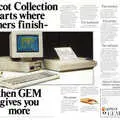
Apricot Collection starts where others finish - then GEM gives you more
This is an advert for an Apricot bundle - the "collection" - which includes the F2 micro, a monitor, printer, keyboard and a tracker-ball mouse. The whole lot came together with Digital Research's GEM...
Gemini Micro
March 1986
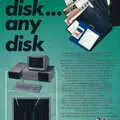
Gemini: Pick a disk... any disk
Gemini had been founded by John Marshall shortly after the receivers had been sent in to his former company Nascom - builder of what was once Britain's most popular kit computer, the Nascom 1. Nascom...
Tandata
March 1986
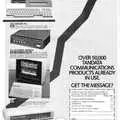
The Tandata P.A. - Data/voice communicating workstation
Tandata originally formed out of Tangerine, which produced a single-board computer called the Microtan 65. By 1984 it had become Tandata Holdings PLC, with Tandata Marketing Limited as one of its divisions....
Casio
February 1983
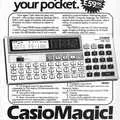
Casio PB-100: The best way to put 1,568 steps in your pocket
Casio's PB-100 was one of several small "pocket computers" released around the same time that look more like calculators, however it was programmable as it had a resident version of BASIC capable of storing...